



It’s a Thursday afternoon like any other Thursday afternoon. Perhaps it’s a quiet day, where the atmosphere around you is settled and the air seems still. Mouse clicks and keyboard taps are the arrhythmic soundtrack of the day, just like every other day.
Or, maybe it’s not a Thursday, perhaps it’s a Tuesday, or a Monday. Maybe you’re at the office or you’re at home. It could be any day.
The point is how, at this point during this particular afternoon, all is strikingly normal. Agonizingly normal. This feeling of normality may have rushed past you unnoticed on any other working day, but, today of all days, you notice that the normalcy has a weight to it.
As the days go by, you realize a growing sense of self and the pang of normalcy that struck you on that day. Your awareness level while at work begins to rise, like the feeling of slowing opening one’s eyes, and you realize that you are noticing more of what is around you. Perhaps you see how your manager truly interacts with your team while in meetings, or how disengaged you feel with your work when you are supposed to be on task, or that each day is beginning to feel just like every other day, or that you’re realizing you are never really happy at work, or...
Whatever you are beginning to realize, the point is that you are realizing something isn’t right. And you begin to think that the bubbling feeling of realization may just be the need for change on the horizon.
The first step in knowing that change is possible is realizing that there is room for change to take place.
While what I just described above may or may not apply to you and your situation, part of it is truly what happened to me. Before working in tech I had worked extremely hard to reach a certain level of skill in music and in choir directing, but, suddenly while teaching, realized that a career shift was going to be necessary for me in my life.
The key for me was the sudden realization that a change was needed in the first place.
Trust me, I wrestled with myself for a long time before surrendering to the truth that I:
Was not happy in the teaching profession
Had worked incredibly hard to be a strong musician and people leader, and
Had zero clue what to do next
I felt lost. I felt ungrateful for the opportunities I had worked for and had been afforded through my education, networking, and sheer luck. But, as I sat on my couch after a long day at work and was truly honest with myself, at some point I had reached the point of no return; I understood my time as a teacher was limited and it was time to strike out and discover my next adventure.
The first step in knowing that change is possible is realizing that there is room for change to take place.
Before moving forward, I want to make a few things crystal clear. I’ll break down the following three points in detail later on:
Changing careers is 100% possible, regardless of age or the industry vertical you want to enter into.
Career change is achievable at any age. We’ll revisit this later, don’t worry (I mean, it is kind of in the title after all if it’s “never too late”!).
Changing careers will take courage, discipline, and perseverance.
“Nothing worth having comes easily,” said Someone Famous, right? And, they’re correct! I wanted to articulate those three points because, if you hear it from no one else, I want you to hear it from me — you can absolutely succeed in changing careers. I say that because I have not only walked-the-talk myself but I have seen many others do the same.
Now, on to the juicy stuff!
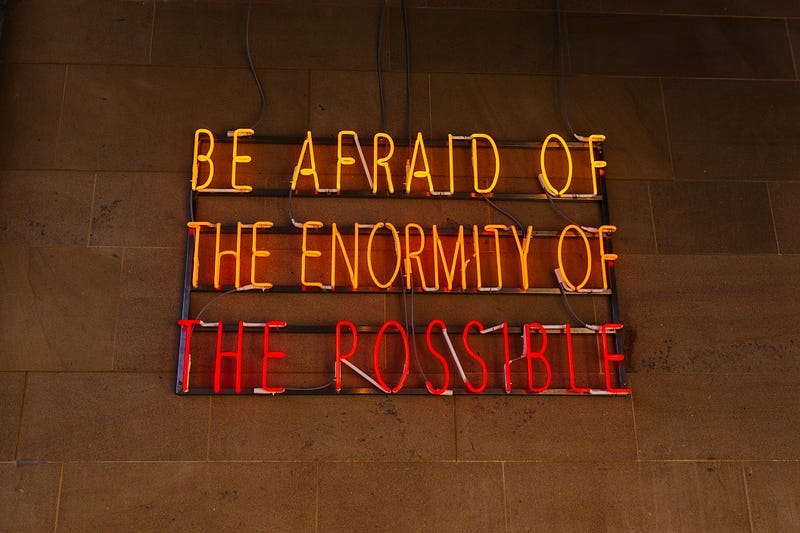
Changing careers is 100% possible
So you’ve had your moment(s) of epiphany, taken the leap, and realized that a major change is needed in your career. Woohoo! Now what do you do? Well, I’m glad you asked.
The way I see it, the people that decide to change careers roughly fall into three camps: (1) Some people already maintain “side hustles” (cough second jobs cough) that simply turn full-time, (2) others may already have some idea of what they want to pursue, and (3) others may know that change is necessary and have no clue (like me!) of what they should go after. All of the above are correct and totally fine.
Once the spark of desire for change is lit, my #1 suggestion is:
If your current job doesn’t put your mental and/or physical health at risk, keep it (pay those bills!)
As best as you can, keep money coming in as you learn about career paths, gain new skills, and search for new jobs
On top of that, here’s my advice:
You’re 100% sure of what to do next — Amazing (in hindsight I’m very jealous). You are still taking a big leap but you have confidence that comes from knowing exactly what you want to do! I’d still encourage careful research in how you conduct your next steps. The key for this cohort is perseverance and commitment to see it through.
You have some idea, but not sure. Here is where patience is key, if possible! Maybe you’re thinking about cybersecurity because you’ve heard it has great earning potential, but then you’ve always wanted to go to law school to get that JD and be an attorney. Whatever your personal choices, I would suggest making a compare/contrast for each of your options. What is the salary potential for each position? Is work-from-home important to you? Would you be willing to relocate for that particular new position? Take these questions into consideration, among many others, and let them stew for a while. Bonus points if you ask professionals in your area, or on LinkedIn, for informational interviews to learn more about what they do. The idea here is to better broaden your horizons by chasing after the ideas you already have. Take notes and take action.
Alright, so you have NO idea what you want to do. You are my people. Please know that I’ve been in your shoes and you have my full heart’s worth of empathy. I know it’s tough. For you, my suggestion is to start doing some soul searching to see what excites and what you think may ignite your ability to learn and grow in a different field. Here there are no wrong answers because all the options are available. For this group, inaction is your enemy. Taking action, of any kind, towards your goal of seeking career change will help establish the momentum that will carry you forward. To help, I curated a couple things to get the creative juices flowing. Follow along as we dive into this Group #3 some more.
For this last group, Google is both your friend and your foe as there is an ocean of resources our there. I’ve looked for a few resources which may be helpful, but know that there are many more that may be of benefit to you:
5 Tips for Changing Careers | Harvard Extension School — My favorite is how their first tip is to start with a self-assessment. Where are you now? Where do you want to go?
The Right Way to Make a Big Career Transition (hbr.org) — This one is a big read, but, as you read, he really pushes you to think and brainstorm. And no, I have all but zero affiliation with Harvard, this just happened this way, I promise.
How to Change Your Career | Guardian Jobs (theguardian.com) — This arose from the 2020 COVID pandemic era yet is quite relevant. The Guardian provides a short read that offers insights into reasons why people change careers, the benefits, and the risks involved.
Time for a career change? | Robert Half — This! Part of this article has you taking stock in your current skills and talents. Remember, you’re changing careers, so you already have a valuable set of skills with which to populate parts of that next career’s resume!

Career change is achievable at any age
Since everyone asks ChatGPT everything these days, I asked, “How old is too old to change careers?” ChatGPT actually gave a very friendly and encouraging reply, which I will share a snippet of here:
There’s no specific age that’s “too old” to change careers. It really depends on various factors such as the individual’s health, financial stability, job market demand, and their willingness to learn new skills.
Not bad, eh? I agree! I don’t think one is ever too old to say that it’s time for something new in their professional life.
I know I shared how, when I realized I needed a career change from teaching music, I had zero idea of what I wanted to do. Well, eventually I started taking free computer science classes online and realized that I enjoyed the science and the analysis portions of that material. Plus, programming stuff and making things happen on the screen was pretty cool, so I decided I’d jump into tech.
When I made the decision to pursue a career in tech, I knew that traditional education was my preferred method of learning. Higher education, while expensive and requiring loans, provides a highly structured learning environment, applied internships (for most technical programs, at least), and is often an easy gateway into full-time employment. Since I already had a Bachelor’s degree and knew that enrolling in a graduate program in an unrelated field would require 1–2 years of prerequisite work, I enrolled in a post-baccalaureate program at a large, public university. This meant that I would earn a full Bachelor’s degree, but I would be exempt from taking all non-core classes within the curriculum (which was amazing, I can’t lie).
While back in school, students in my class ranged in age from 18 to 60+.
Some were fresh out of high school, some were adults who worked full-time and pursued their degrees at night, and some were members of the armed forces who served and were utilizing their G.I. Bill to earn their degree. I was amazed by the diversity of ages in each of my classes, in addition to the extreme range of experience levels.
I had convinced myself that I would know less than everyone else in every class, simply because I was a career changer. In truth, that was never the case.
Psychologists call this the “spotlight effect”, where you think everyone else notices you for what you notice internally within yourself. However, just like I realized that there was a need for change, I eventually realized that everyone else struggled with learning just as much as I did sometimes, and there was no need to feel inferior just because I had started back from Square 1 on the career ladder.
Currently I work in information security for a stellar company, doing work that is both engaging and meaningful. Now that I have worked in tech for some years, I have seen many, many people older than myself on LinkedIn earn CompTIA certifications like A+, Network+, and/or Security+, which is amazing to see (if you’re not in tech/IT, those are IT certifications). Also, I’ve seen countless adults pursue ethical hacking and/or penetration testing studies on LinkedIn (if you’re not a security person, no worries — those are just tech topics/skills), which is simply wonderful. It’s exciting to see.
Do not let your age define you. Do not let your age prevent you from thinking a career change is not within reach. Yes, take stock of your situation, and, yes, always evaluate your options and analyze decisions carefully before taking action, but know that a career change is always 100% within your grasp.

Changing careers will take courage, discipline, and perseverance
Look at the photograph above. Sometimes, the choice to change careers will have you feeling like you are the lone tree in the desert. You may feel isolated, alone, and you may feel like the world is watching you (remember me mentioning the psychology of the “spotlight effect” earlier?).
Please know that I don’t depict these things to scare you. Not at all! I share only in the hopes that you may be prepared for what may lie ahead.
So, you may be wondering why I mention “courage, discipline, and perseverance” in the title of this section. Well, thank you for asking! Let’s break it down a bit:

Courage
The first step in the process was coming to the realization that change was needed, right? Well, I don’t know about you but I consider that a massive leap of courage. Even if you realized you needed to change careers and didn’t tell anyone, that’s still courageous!
Sometimes changing careers means you’re making a decision to do something that may be hard for people to relate to, and that’s okay.
“You’re quitting your job?”, “Why would you walk away from those benefits?”, “What do you mean you’re changing careers, after all those years in college…?”
Maybe it’s a partner who questions you, or maybe it’s a spouse or parent, or maybe it’s simply yourself. Whoever it may be, the questions are inevitable and courage is required to confront those questions, in kind, with honest answers. Courage is required to think about stepping away from what’s known and into the professional unknown.
Courage is not an expression, by the way. Courage is something that comes from internal fortitude and strength. That same courage that will propel you to know that change is necessary will be called upon again as you encounter difficulties throughout the change process, for instance:
Networking / reaching out for informational interviews
That first interview in a brand new field, with brand new skills
Landing that first job and overcoming imposter syndrome (totally a thing, trust me)
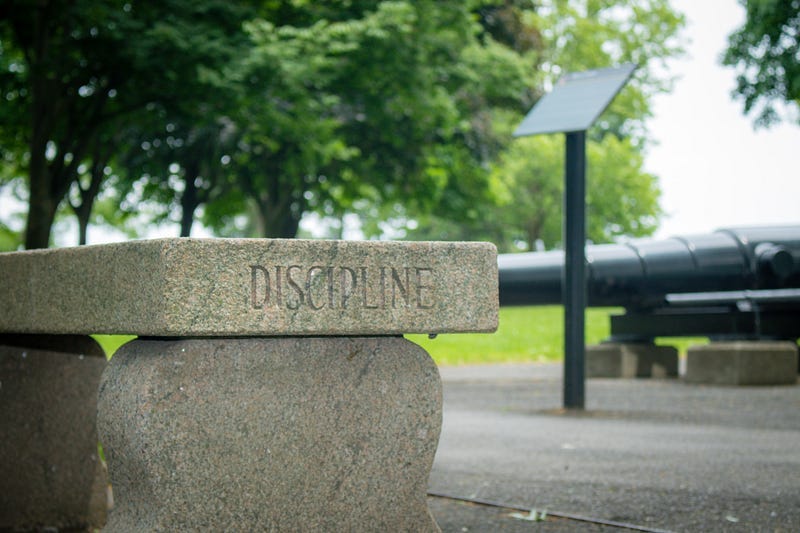
Discipline
I think I mentioned “stick-to-it-tiveness” earlier and I’m fairly certain that’s a word, but I am doubly-certain that discipline is required in order to achieve a successful career change.
If you jumping into a completely unrelated field where the learning of new skills is required, then get ready for an oil change of the discipline engine because you want to make sure that baby is running smooth as you get work. Learning new skills, especially after you have been working full-time in a field where skills may feel comfortable to you, takes lots of effort, and you’ll need to rely on discipline to see you through.
“Nathan”, you may ask, “why not include ‘motivation’ here instead of ‘discipline’?”
You know, I’m not sure why I’ve stuck with this format of making up questions that made-up readers may ask, but let’s just keep rolling with it. “Motivation” is an extremely powerful thing that can be combined with discipline, yet they are different forces:
Motivation = desire; desire carries the potential to be fleeting so is therefore unreliable on a consistent basis
Discipline = regimen (definition #2 in the link); your ability to demonstrate specific behaviors consistently over time
The motivation will lift your spirits and have you cruising on the good days. Your discipline will keep your nose in the books or have you filling out job applications on the bad days, when your motivation is low.
If you rely on motivation alone then changing careers will be extraordinarily difficult. By cultivating discipline, you can better set yourself up for success as you transition.
For discipline, I would say here that what’s important is to really know yourself, first and foremost. What times of day are you most alert/most effective? Do you think going back to school would be best for you, or a different path? What is your tolerance for learning new skills, applying for new jobs, and working your current job at the same time?
Here, the most important thing is to try. By trying different behavior patterns you will learn what activates your brain the most and what does and does not work for you. Do this over time and you will eventually hone a disciplined approach for tackling your career change.
Speaking of time, this dovetails nicely into my final point, perseverance.

Perseverance
You’re courageous — you realized that change was needed and were brave enough to acknowledge that fact.
You’re disciplined — yes, you rode that tidal wave of motivation after realizing that change was needed, but you capitalized on that to craft a disciplined approach for yourself. You’re chipping away steadily at your goals, making steady progress without overburdening yourself.
Now… what do you do?
Here’s where our final champion, perseverance, steps into the arena.
The road to changing one’s career looks different for all of us. For some of us, it’s a path that takes years, including going back to school, new degrees and new cities. For others, maybe the timeline is shorter but tough decisions still remain part of the career changing game. The process is not any easier or any more difficult based on the factor of time alone.
Without perseverance, I’m not sure if myself or anyone I know would have been able to successfully transition into our new careers. Even with the support of my partner my career transition was still extremely difficult. I worked at a steel shop as much as I could while back in school full-time, pursuing additional studies on the side and working full-time in the summers to make my transition as successful as possible. There are individuals I knew through school who did it all themselves with no help from friends or family, and I applaud them to this day for such an effort.
Just like how you can’t put all your eggs in the basket of motivation, knowing that motivation will eventually wane, in times where your motivation is lacking you can draw on your discipline and perseverance to see you through.
Perseverance, by the way, is not simply you thinking positively when times may be tough. Not at all. Your ability to persevere is your ability to see things through in spite of the obstacles that life may throw your way. And, trust me, life has a way of keeping you on your toes!
I really wish I had a bag of tricks for helping you to build perseverance, but I’m not sure that I do. And, to be honest with you, I don’t want to be shallow and share things that I Googled and didn’t trial myself.
You will, no doubt, know the tough times when they come. Perseverance is when you accept that the tough times are here, take a breath, and then decide to keep moving forward. That is perseverance in action.
Changing my career into tech truly changed my life for the better. If you’re on the fence about whether or not a career change is right for you and your situation, know that no one else but you can make that decision for you.
However, know that change is always possible. I hope this article was a small step in helping someone.
If this helped you in any way, please do share with someone you know.